
 BG
BG  BY
BY  CY
CY  DE
DE  EE
EE  ES
ES  EU
EU  GR
GR  HU
HU  IS
IS  IT
IT  LT
LT  LV
LV  MY
MY  PL
PL  PT
PT  RO
RO  SK
SK  TR
TR  UA
UA  USA
USA Hvězdářský dalekohled Bresser Arcturus 60/700 AZ
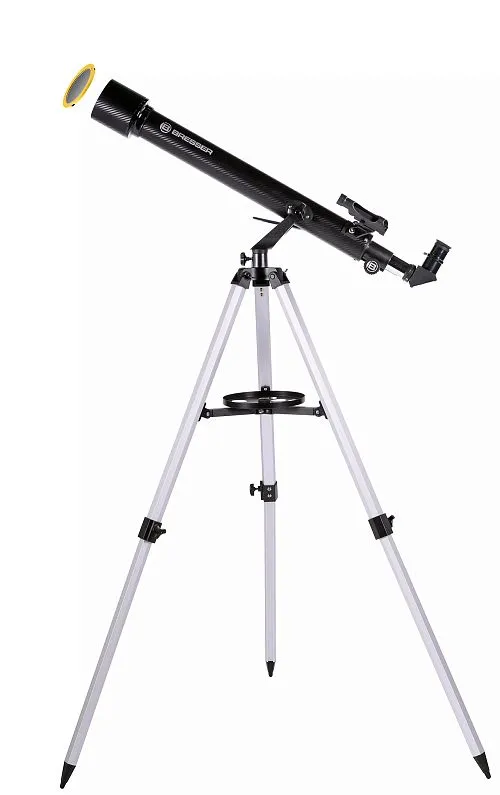
Refraktor. Průměr čoček objektivu: 60 mm. Ohnisková vzdálenost: 700 mm
| ID výrobku | 75664 |
| Značka | Bresser GmbH, Německo |
| Záruka | 2 roky |
| EAN | 4007922010311 |
| Velikost balení (DxŠxV) | 82x27x16 cm |
| Přepravní hmotnost | 3.75 kg |
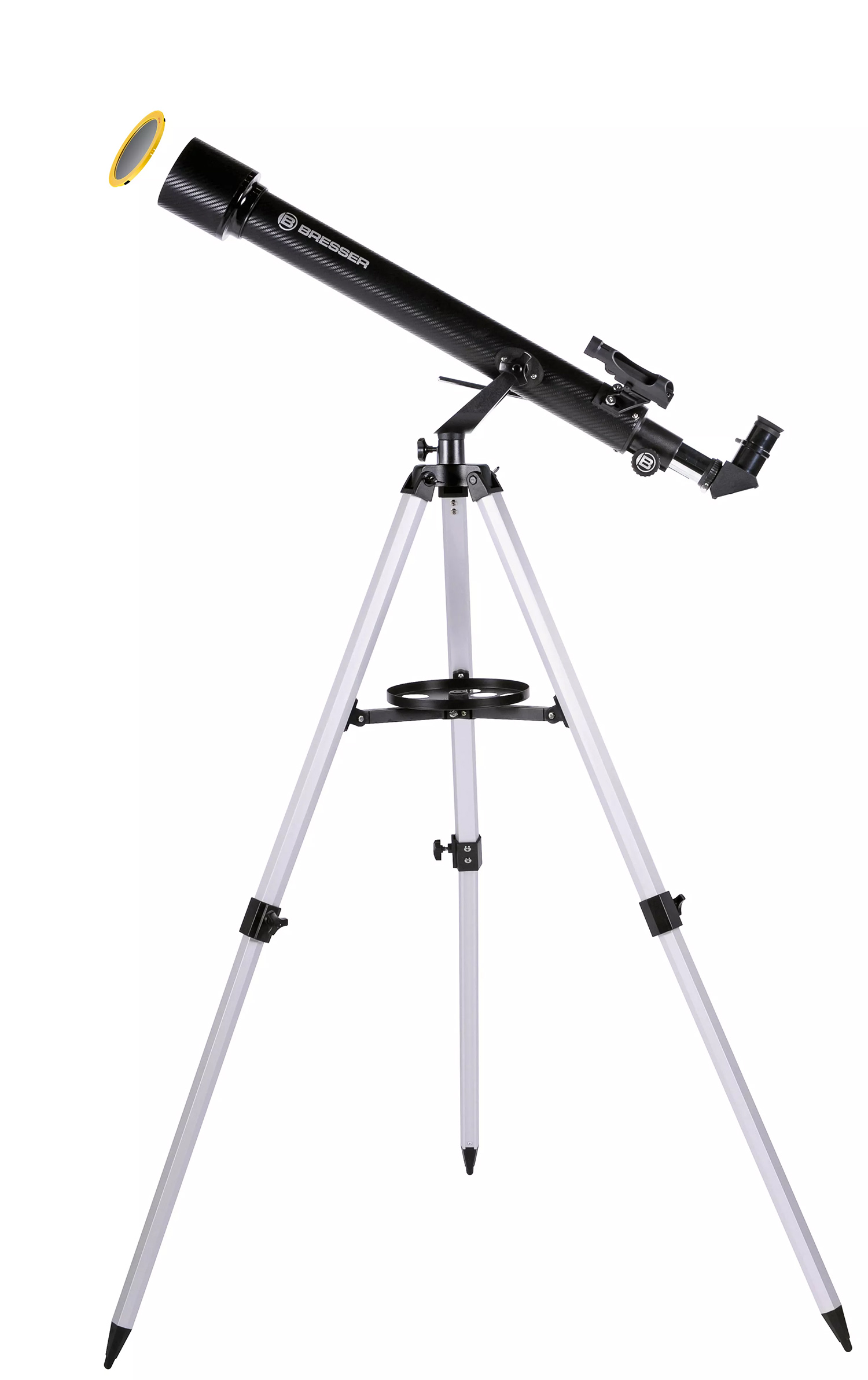
Set up and start being amazed right away: the Bresser Arcturus 60/700 AZ lens telescope takes you one step closer to the fascinating world of planets and star clusters. The complete astronomy set includes everything you need for your immediate start in celestial observation: an astronomical lens telescope with 60 mm aperture and 700 mm focal length, an azimuthal mount, a tripod and many accessories. The system is very easy to use – perfect for introducing children to the exciting hobby of astronomy.
Simply an astronomical classic – the telescope
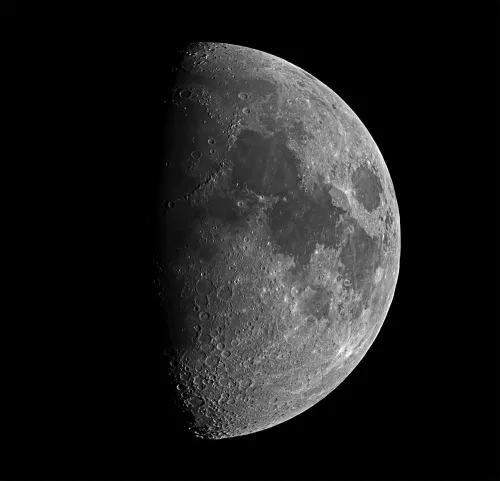
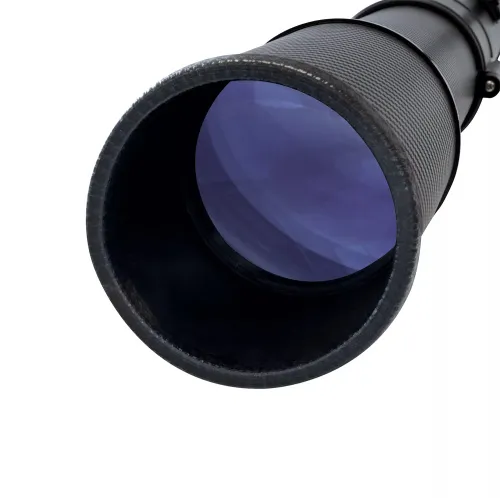
A well-tried principle: this classic lens telescope – also called an achromatic refractor of the Fraunhofer type – shows beginners and children the beauties of the night sky. The starter telescope offers good imaging properties thanks to its modern, precisely coated optics. The large focal ratio of about 1 to 11.7 (F/11.7), which results from the ratio of the 60 mm aperture and 700 mm focal length, delivers sharp images with good contrast. Ideal for exploring our Moon, the planets, but also open star clusters and globular clusters with your own eyes. But how big do these celestial objects appear? With its resolving power determined by the aperture size, the telescope easily delivers really sharp images up to about 120x magnification. Technically, even more is possible using this beginner’s telescope – theoretically up to 525x with the included accessories. However, as the magnification increases, the image usually becomes more and more blurred. In addition, the telescope is not the only factor determining the possible magnification. The air turbulence in the atmosphere is always an important criterion as well (seeing conditions).
Your foundation for moving observations – mount and tripod
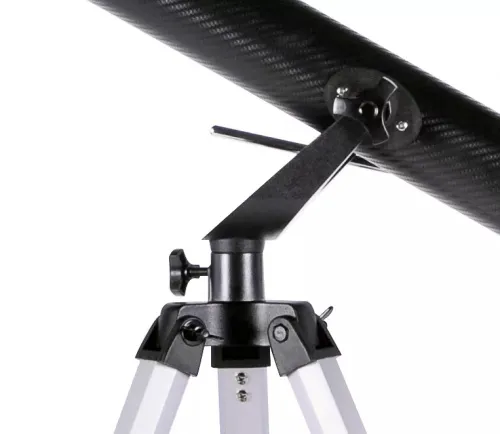
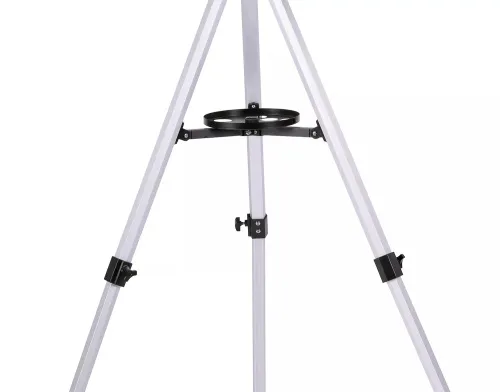
Once you have found the right location for your astronomical adventures, attach your telescope to the height-adjustable aluminium tripod with azimuthal mount. The easy handling of this azimuthal mount allows you to move effortlessly from one astronomical sight to the next. Simply swing the starter telescope manually to the left and right, up and down – just like a normal photo tripod. In order to keep eyepieces, solar filters etc. within reach at all times, just place your accessories on the practical storage plate between the tripod legs.
Everything for your astro quickstart – the accessories
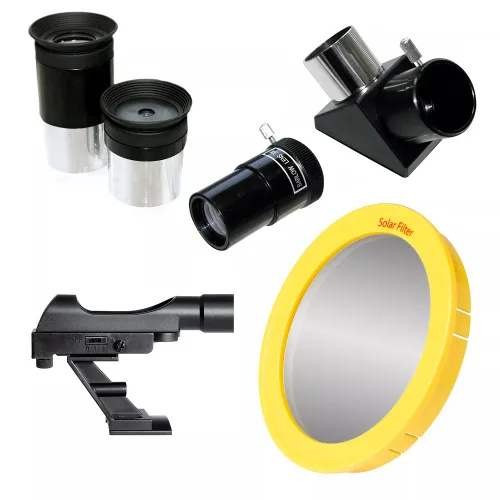
In order to enable you to see as much as possible, the beginner’s telescope comes with an extensive range of accessories. With the LED viewfinder, for example, you can keep track of the sky. It’s a direction finder that you mount parallel to the actual telescope. It projects a red dot onto a small ground-glass screen. When you look through it, the red dot appears to be floating in front of the sky, exactly where the optics of your telescope are pointing. This makes it easier to find celestial objects and to align the telescope accurately – just before you look more closely with the higher magnification. And how high that is, you determine by choosing the appropriate eyepiece. Two are already included in the set: 4 mm and 20 mm. Moreover, you can triple the magnification of the eyepieces with the 3x Barlow-lens. If at some point you want to extend your field of view with additional eyepieces, this poses no problem at all. The socket diameter of 1.25 inch (31.7 mm) corresponds to an international and manufacturer-independent standard. This offers you a wide choice of optional eyepieces you can use with your telescope.
For you to direct your gaze comfortably to star clusters and planets, the 90-degree diagonal mirror allows you to easily look into the starter telescope. This way you don't have to lie down under the entry-level telescope when the optics are pointing at the sky. Instead, you just look in from the side.
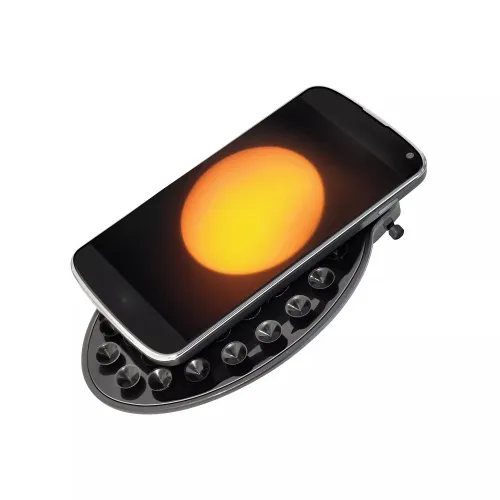
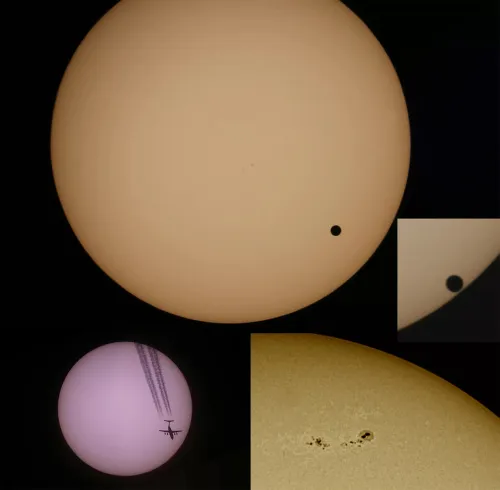
However, not only the night holds numerous interesting sights for us. During the day, especially our nearest star is worth a look. So take the solar-filter and direct your gaze safely at sunspots and granulation on the Sun.
WARNING: Never point the telescope at the Sun without the solar filter!
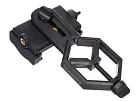
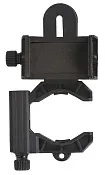
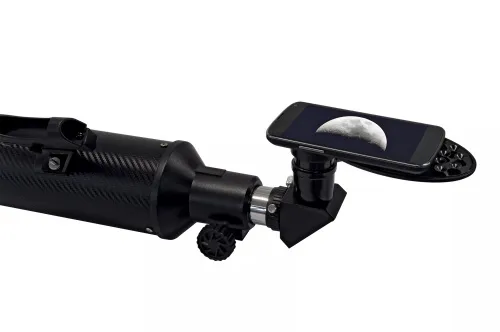
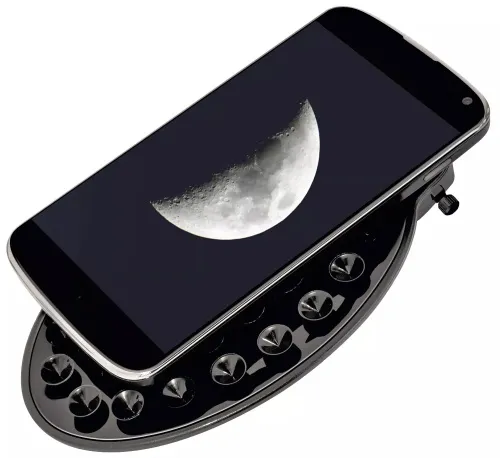
If you want to capture and share your discoveries, just take photos of the Moon, Sun and more using the included smartphone adapter.
Key features:
- Beginner’s telescope for astronomy
- 60 mm aperture and 700 mm focal length
- Achromatic refractor type Fraunhofer
- Ideal for observing the Sun, Moon, planets and star clusters
- Height-adjustable tripod with azimuthal mount
- Easy to use, therefore suitable for children
- Focal ratio F=11.7, thus sharp image and high contrast
- Two eyepieces and one Barlow lens with 31.7 mm (1.25 inch) sockets for different magnifications
- Safe solar observation with the included solar-filter
- First steps in astrophotography with smartphone-camera-adapter
The kit includes:
- Starter lens telescope
- Aluminium tripod
- Azimuthal mount
- Eyepieces: 4 mm and 20 mm (1.25 inch sockets)
- Barlow-lens 3x (1.25 inch socket)
- Star diagonal mirror
- LED red dot finder
- Solar-filter
- Smartphone camera adapter
- Accessory tray
- Astronomy software for download
- Instruction manual
| ID výrobku | 75664 |
| Značka | Bresser GmbH, Německo |
| Záruka | 2 roky |
| EAN | 4007922010311 |
| Velikost balení (DxŠxV) | 82x27x16 cm |
| Přepravní hmotnost | 3.75 kg |
| Optická konstrukce | refraktor |
| Optické schéma | achromatický |
| Průměr objektivu (apertura), mm | 60 |
| Ohnisková vzdálenost, mm | 700 |
| Zvětšení, x | 35 — 525 |
| Okuláry | 4 mm, 20 mm |
| Barlowova čočka | 3x |
| Hledáček | červený terč, LED |
| Stativ | hliník |
| Montáž | altazimutální |
| Typ uživatele | začátečníci |
| Pozorovaný objekt | objekty hlubokého vesmíru |
První nastavení teleskopu. Použití jakéhokoli dalekohledu začíná jeho sestavením
Vyhledejte si zajímavou recenzi historie vývoje čočkového teleskopu neboli refraktoru
Velký význam má konstrukce optického tubusu, protože ten nám umožňuje pozorovat všechny krásy vesmíru
Optické vlastnosti, konstrukce, montáž, příslušenství – vše je důležité, když vybíráte dalekohled pro dítě. Dozvíte se, jaký dětský dalekohled zvolit pro malé průzkumníky všech věkových kategorií
V tomto článku jsme shromáždili odpovědi na nejčastější otázky týkající se teleskopů
Vesmírné objekty, které lze spatřit v teleskopech Levenhuk
Abychom vám celý proces, jak si vybrat teleskop, usnadnili, řekneme si něco o charakteristikách nejoblíbenějších typů moderních dalekohledů
Tento informační leták obsahuje informace o různých typech teleskopů a nejběžnějších chybách začátečníků
Vše o rozměrech a typech teleskopů, jejich zvětšení a o montážíchb